
Compare peptide sourcing options
Quick Discount
| Vendor | Discount code | What to do |
| Crush Research | PSTACK | Enter the code at checkout and verify the discount |
| Peptide Plugs | PSTACK | Enter the code at checkout and verify the discount |
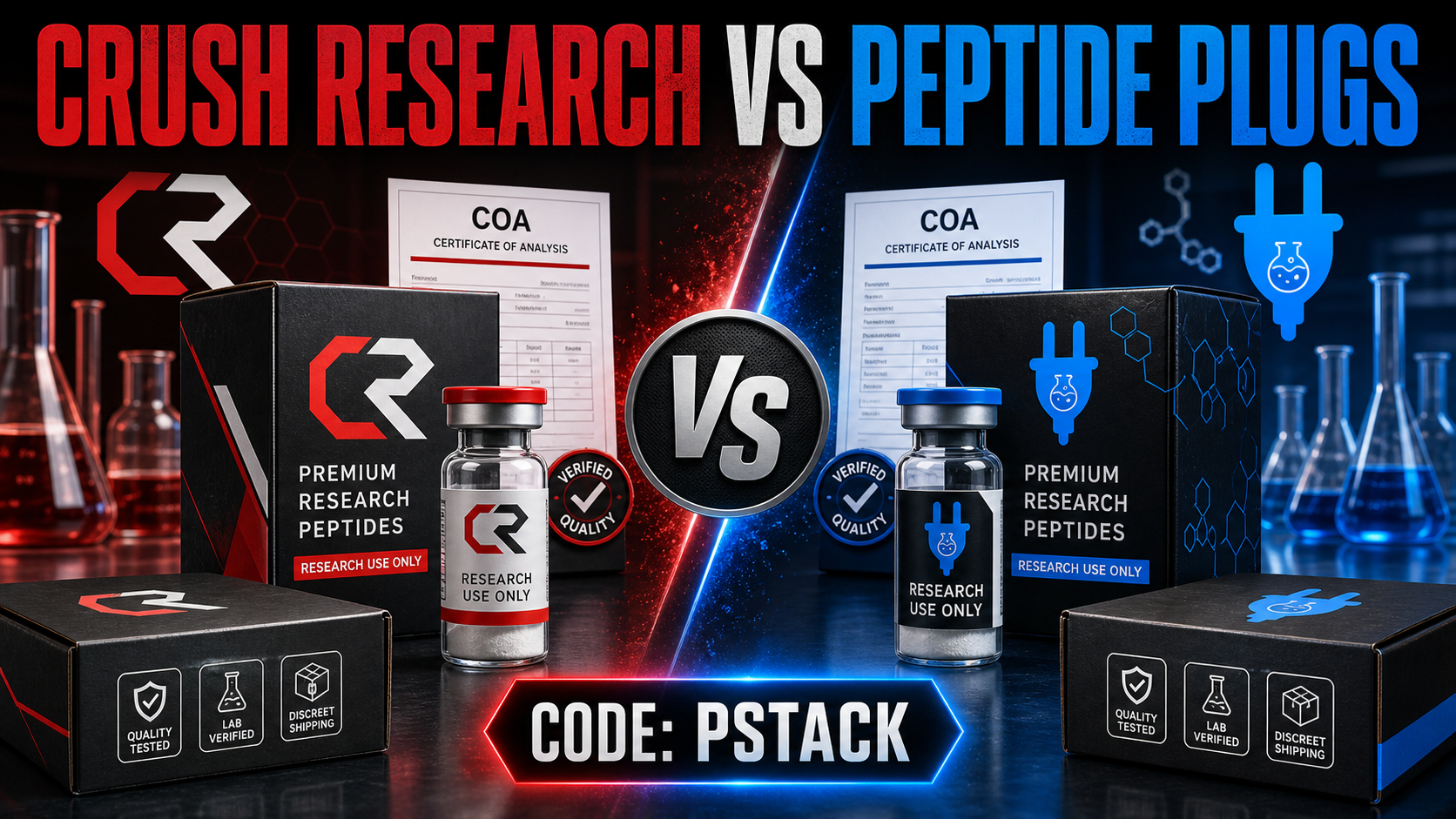
The same coupon code works for both vendors: enter PSTACK at checkout. Discount terms can change, so confirm that the price decreases in the final order summary before submitting payment. Do not assume a code was applied merely because the checkout accepted the text.
Quick Verdict
Crush Research is the stronger choice for researchers who prioritize visible batch-testing infrastructure, multi-pack options, and a veteran-owned U.S. supplier identity. Peptide Plugs is appealing for shoppers who want a polished storefront, easily accessible COA navigation, visible purity labels, bundle pricing, and a strong emphasis on fast Texas fulfillment. Both vendors sell products strictly for laboratory research and not for human or veterinary use.
Neither storefront should be judged by branding alone. The practical decision comes down to the exact compound, current batch documentation, price after code PSTACK, shipping terms, and support responsiveness. Always match a Certificate of Analysis to the product and lot being purchased rather than relying on a generic testing statement.
Crush Research vs Peptide Plugs at a Glance
| Category | Crush Research | Peptide Plugs |
| Positioning | Veteran-owned U.S. research supplier | Texas-based research peptide storefront |
| Testing access | Public testing-results navigation and batch pages | COAs and testing section in main navigation |
| Catalog style | Single vials and multi-pack purchasing | Individual products, blends, and bundle pricing |
| Shipping message | Fast U.S. fulfillment and order tracking | Same-day shipping language on qualifying orders |
| Discount | Use code PSTACK | Use code PSTACK |
Crush Research Overview
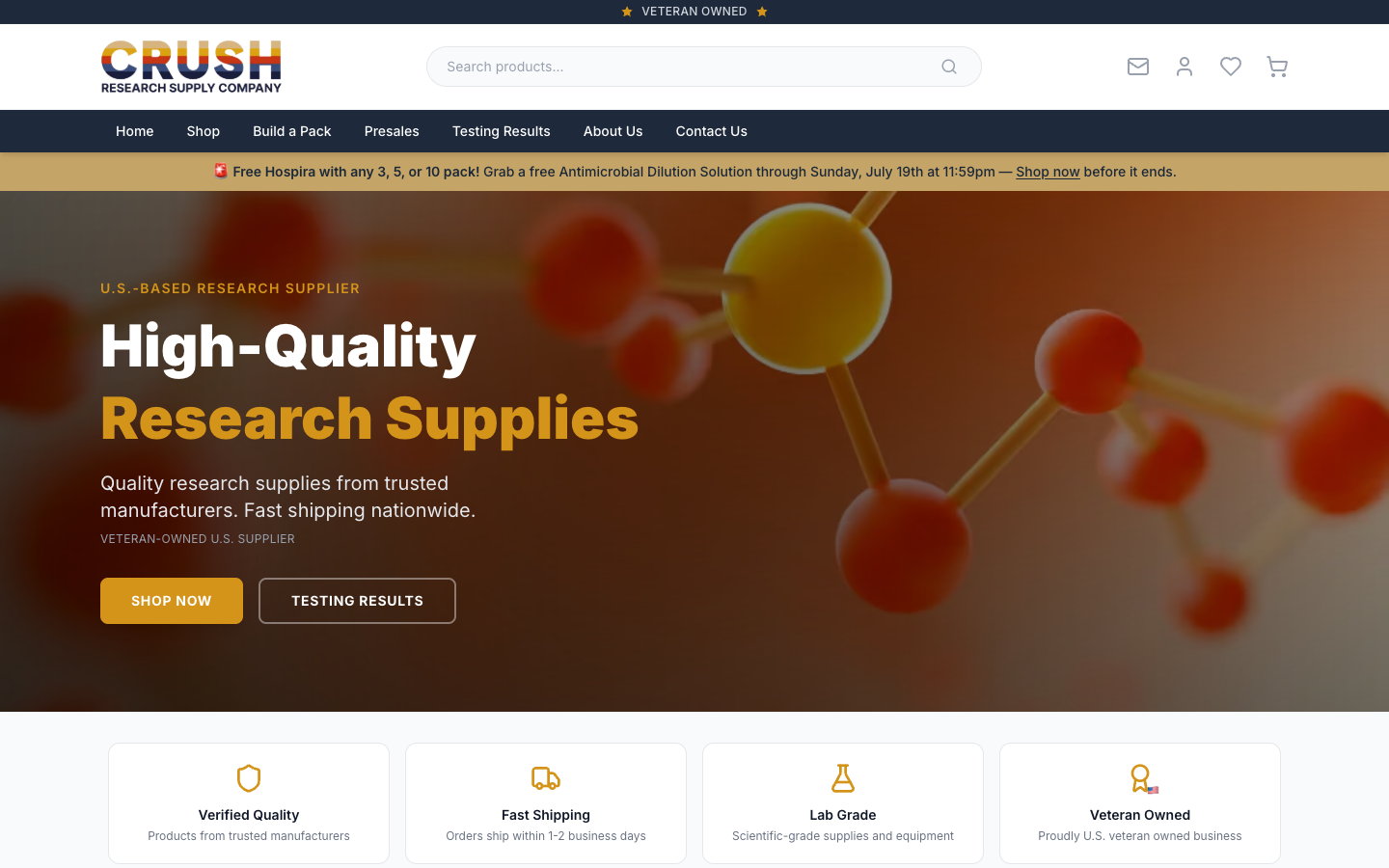
Crush Research operates through crushresearch.shop and presents itself as a veteran-owned, U.S.-based supplier of research materials. Its homepage emphasizes quality controls, fast fulfillment, laboratory-grade materials, and public testing results. The site organizes products with single-vial and multi-pack choices, making it easy to compare the effective price per vial at different quantities.
The company also publishes a testing-results area with batch-level pages. Those pages can display product identity, lot information, the named testing laboratory, purity results, measured vial content, endotoxin results, and a Certificate of Analysis. That structure is more useful than a single generic purity badge because it gives researchers a path to evaluate an individual batch.
What Crush Research does well
The strongest aspect of the storefront is its emphasis on testing visibility. A public testing index, lot identifiers, and linked reports make due diligence easier. The homepage also communicates shipping expectations and support access without forcing visitors to search through several policy pages. Multi-pack pricing is clearly separated, which helps laboratories compare total acquisition cost for larger projects.
Crush Research also identifies its ownership story and official channels. That does not prove the quality of every product, but transparent ownership and contact information are useful trust signals in a market where lookalike domains and unofficial payment requests can appear. Researchers should still verify the current domain and avoid responding to unsolicited links.
Crush Research discount code
Use code PSTACK during the Crush Research checkout process. Enter the code in the coupon or promotion field, apply it, and confirm that the order subtotal changes. Compare the discounted total rather than the headline product price because shipping, quantity tiers, and temporary promotions can affect the final cost.
Where Crush Research may be less convenient
A testing page is only as useful as its connection to the product in the cart. Researchers need to confirm that the report matches the current batch or lot, not merely the same compound name and nominal strength. Inventory can also shift between single vials and kits, so the lowest advertised per-vial cost may require purchasing more material than a small project needs.
Peptide Plugs Overview
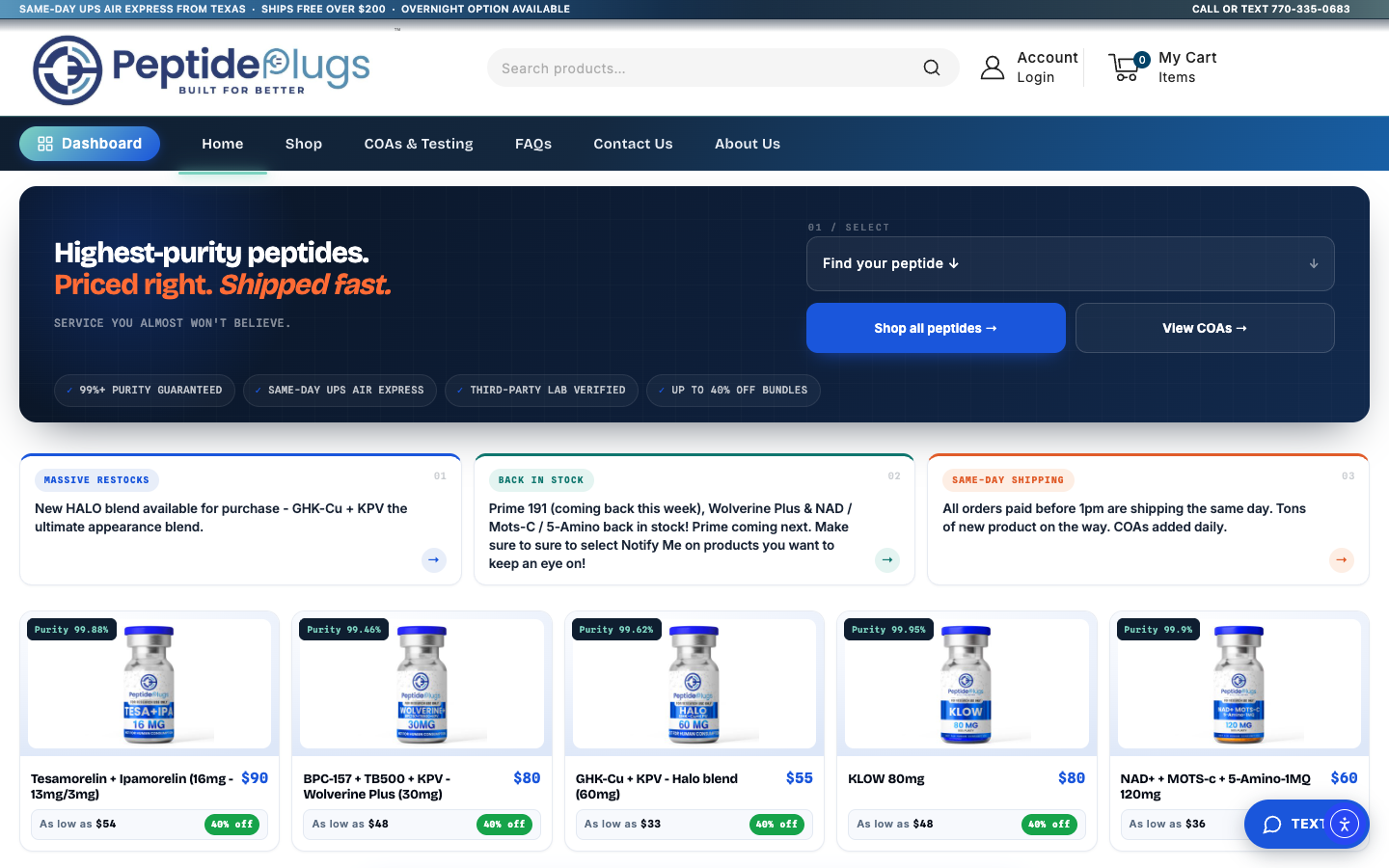
Peptide Plugs operates through peptideplugs.com and positions itself around research-grade peptides, third-party testing, fast fulfillment, and straightforward catalog browsing. The homepage includes navigation for COAs and testing, visible product cards, purity labels, bundle offers, and shipping information. The company identifies Austin Research Products LLC and provides public support and contact details.
The storefront is designed for quick product comparison. Visitors can scan compounds, strengths, pricing, availability, and promotional badges without opening every listing. This is convenient for researchers assembling a shortlist, though the product page and matching documentation still deserve closer review before an order is placed.
What Peptide Plugs does well
Peptide Plugs makes several important storefront signals visible near the top of the site. COA navigation, purity claims, fulfillment messaging, product availability, and support access are easier to find than on many small vendor websites. Bundle pricing can be useful when a laboratory needs several vials, while individual listings remain available for smaller projects.
The company also describes a direct support approach and publishes an identifiable business entity, phone numbers, email addresses, and a physical mailing address. These details do not replace analytical verification, but they give researchers clear channels for questions about a batch, order status, or policy before payment.
Peptide Plugs discount code
Use code PSTACK at Peptide Plugs checkout. Apply the code before completing the order and verify the discount in the final summary. If the code does not change the price, check whether the product is already part of a promotion, whether coupon stacking is restricted, or whether the offer terms have changed.
Where Peptide Plugs may be less convenient
A polished catalog can encourage quick decisions, but the important evidence sits behind each product and COA. Researchers should verify the report date, compound identity, stated quantity, batch identifier, and testing method. Same-day shipping language should also be read with any cutoff times, qualifying-order rules, and carrier conditions in mind.
Product Selection and Catalog Experience
Both vendors present broad research catalogs, including individual compounds and blends. Crush Research leans heavily into quantity tiers, with separate single-vial and kit pricing that makes bulk comparisons easy. Peptide Plugs uses a more traditional ecommerce grid with product badges, stock indicators, purity labels, and bundle offers.
The better catalog depends on the project. A laboratory that already knows the exact compound and required quantity may prefer Crush Research’s pack-based pricing. A researcher comparing several compounds or blends may find Peptide Plugs easier to scan. In either case, catalog breadth should not outweigh documentation quality for the specific lot.
Testing and COA Transparency
Testing transparency is the most important comparison category. Crush Research publishes a structured testing section with batch-level records and linked certificates. Peptide Plugs keeps COAs and testing visible in the main navigation and places purity information throughout the storefront. Both approaches are useful when the documentation is current and traceable to the exact item being sold.
A credible COA review should check more than the headline purity percentage. Look for the compound name, lot or batch number, sample receipt and report dates, analytical method, measured mass or content, laboratory identity, and any endotoxin or related results relevant to the research protocol. Vendor-hosted documents can support transparency, but researchers should independently verify report details where possible.
Do not treat one passing result as proof for every future batch. Manufacturing, handling, storage, and fulfillment can vary over time. The strongest purchasing decision uses a report tied to the current inventory and preserves that documentation with the project records.
Pricing and Discount Comparison
Crush Research frequently displays lower effective per-vial pricing as pack size increases. Peptide Plugs combines individual pricing with bundles and promotional offers. Because the structures differ, compare the same compound, stated quantity, number of vials, shipping cost, and discount-adjusted total. A cheaper sticker price may represent a different vial count or nominal strength.
Code PSTACK can provide a discount on both platforms. Apply it to each comparable cart before deciding. Researchers should also avoid buying a large kit only to reach a lower unit price if the project does not require that volume or if storage conditions cannot be maintained for the full period.
Shipping and Fulfillment
Both companies market domestic U.S. fulfillment. Crush Research states that orders typically ship quickly from its U.S. operation and provides tracking. Peptide Plugs emphasizes Texas fulfillment and same-day shipping for qualifying orders. Actual delivery time can still depend on order cutoff, inventory, weekends, holidays, carrier service, and destination.
Before ordering, review the current shipping policy and determine when an order is considered processed rather than merely labeled. Researchers with time-sensitive work should contact support about stock and dispatch timing instead of relying only on a homepage banner.
Customer Support and Business Transparency
Crush Research publishes its ownership story, official domain, customer-service channels, and business address. Peptide Plugs identifies its operating company and provides phone, email, and address information. Public contact details make pre-purchase verification easier and provide a documented path for order questions.
A practical support test is to ask a specific question about the current batch, COA, shipping cutoff, or return policy before placing a large order. The clarity and relevance of the response can be more informative than generic testimonials. Preserve written responses that influence a purchasing decision.
Which Vendor Should You Choose?
Choose Crush Research if:
You prefer pack-based pricing, want a public batch-testing index, value visible ownership information, or need to compare larger quantities. Crush Research is particularly appealing when the exact current lot has a clear report and the project benefits from multi-vial pricing.
Choose Peptide Plugs if:
You prefer an easy-to-scan storefront, visible purity and stock labels, accessible COA navigation, bundle offers, and fast Texas fulfillment messaging. Peptide Plugs may be the more convenient experience for comparing several products before narrowing the list.
Choose neither until:
You have confirmed the correct domain, matched the product to current documentation, reviewed shipping and refund terms, tested support responsiveness when needed, and verified the discount code in the final cart. Research-use-only materials should never be treated as approved medicines or products intended for personal use.
Frequently Asked Questions
What is the Crush Research discount code?
Use code PSTACK at Crush Research checkout and verify that the discount appears before paying.
What is the Peptide Plugs discount code?
Use code PSTACK at Peptide Plugs checkout and confirm the updated subtotal in the final order summary.
Are Crush Research and Peptide Plugs the same company?
No. They are separate research-supply storefronts with different domains, branding, catalogs, pricing structures, fulfillment messaging, and company information.
Which vendor has better testing transparency?
Crush Research presents a particularly structured public testing index with batch pages. Peptide Plugs also makes COAs and testing prominent. The better evidence is whichever vendor provides a current report that clearly matches the exact product and lot under consideration.
Are these peptides intended for human use?
No. Both vendors label their products for laboratory research only and not for human or veterinary consumption. This comparison is about storefront, documentation, pricing, and fulfillment signals, not medical use.
Final Verdict
Crush Research wins for researchers who place the most value on batch-level testing infrastructure, pack pricing, and visible U.S. ownership. Peptide Plugs wins for storefront usability, catalog scanning, accessible COA navigation, bundle presentation, and fast-fulfillment messaging. Neither should be selected solely because it looks polished or offers a coupon.
Use code PSTACK on either site, compare the final totals, and verify the current batch documentation before making a decision. The best vendor is the one that can support the exact research requirement with traceable evidence, clear terms, responsive communication, and a properly documented chain from listing to delivered material.