
In today’s fast-paced digital world, mental performance has become just as important as physical fitness. Long work hours, constant connectivity, information overload, and chronic stress have created an environment where burnout has become increasingly common.
As a result, consumers are shifting their focus toward cognitive health—the ability to think clearly, maintain focus, manage stress, and support long-term brain function. This growing interest has fueled the rise of adaptogens, nootropics, functional beverages, and personalized mental wellness technologies designed to improve resilience and optimize brain performance.
What was once a niche wellness category has evolved into a multi-billion-dollar industry. From morning mushroom coffee to stress-support supplements and AI-powered wellness apps, people are actively seeking ways to enhance mental energy while protecting their cognitive health.
What Is Cognitive Health?
Cognitive health refers to the brain’s ability to perform essential mental functions, including:
- Memory
- Learning
- Attention
- Focus
- Problem-solving
- Decision-making
- Emotional regulation
- Stress management
Strong cognitive health allows individuals to remain productive, emotionally balanced, and mentally sharp throughout their lives.
Factors that influence cognitive health include:
- Sleep quality
- Nutrition
- Physical activity
- Stress levels
- Social interaction
- Mental stimulation
- Hormonal balance
Increasingly, consumers are turning to natural interventions to support these functions before cognitive decline or burnout becomes a serious concern.
Why Cognitive Wellness Is Becoming a Priority
Modern lifestyles place unprecedented demands on the brain.
Common challenges include:
- Digital fatigue
- Chronic stress
- Poor sleep habits
- Constant multitasking
- Workplace burnout
- Anxiety and overwhelm
Many people report feeling mentally exhausted despite maintaining good physical health.
This shift has created growing demand for products and practices that support:
- Mental clarity
- Sustained energy
- Focus and concentration
- Emotional resilience
- Stress recovery
- Long-term brain health
As awareness grows, cognitive wellness is becoming a core pillar of preventive healthcare.
What Are Adaptogens?
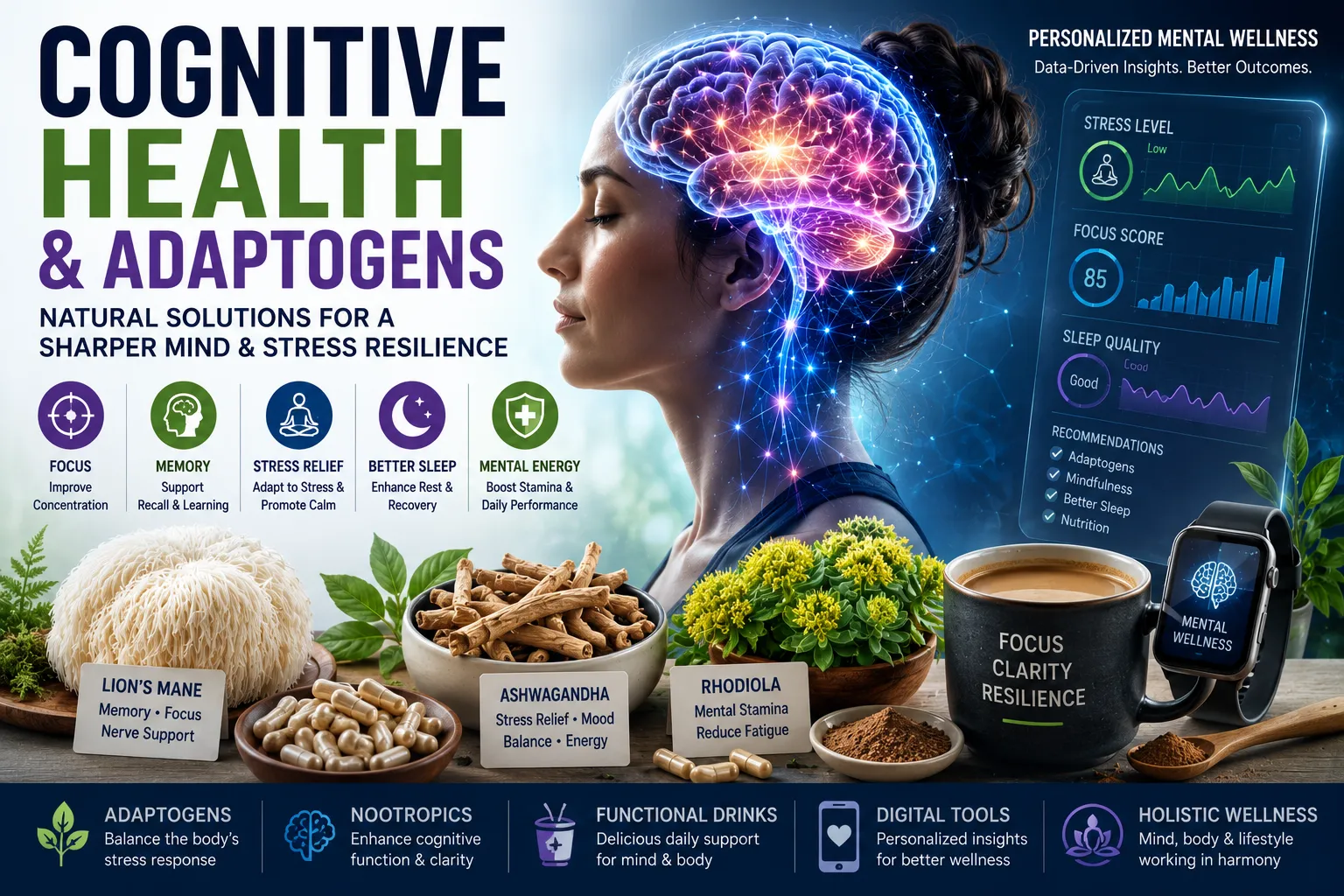
Adaptogens are natural substances believed to help the body adapt to physical, emotional, and environmental stress.
Unlike stimulants that provide short-term energy spikes, adaptogens aim to support balance within the body’s stress-response systems.
Researchers believe adaptogens may influence the hypothalamic-pituitary-adrenal (HPA) axis, which regulates stress hormones such as cortisol.
Potential benefits include:
- Improved stress resilience
- Better energy management
- Enhanced focus
- Reduced fatigue
- Improved mood stability
While research continues, adaptogens have become increasingly popular in wellness routines worldwide.
Ashwagandha: The Stress Management Superstar
Ashwagandha is one of the most widely studied adaptogenic herbs.
Traditionally used in Ayurvedic medicine, it has gained popularity for its potential ability to support stress reduction and emotional well-being.
Potential benefits include:
- Lower perceived stress
- Reduced cortisol levels
- Improved sleep quality
- Enhanced mood
- Better resilience during periods of high pressure
Many professionals, entrepreneurs, and students use ashwagandha as part of a daily stress-management routine.
Rhodiola Rosea: Supporting Mental Energy
Rhodiola rosea is another popular adaptogen often used to combat fatigue and mental exhaustion.
Traditionally used in cold-climate regions, rhodiola is associated with:
- Increased mental stamina
- Improved concentration
- Reduced fatigue
- Enhanced resilience during stressful situations
Many users report improved productivity and mental performance during demanding work periods.
Lion’s Mane Mushroom and Brain Function
Among functional mushrooms, lion’s mane has emerged as one of the most discussed ingredients in cognitive wellness.
Lion’s mane contains bioactive compounds that researchers believe may support nerve growth factor (NGF) production, which plays a role in brain cell maintenance and communication.
Potential areas of interest include:
- Memory support
- Learning capacity
- Focus
- Mental clarity
- Healthy aging
Although research remains ongoing, lion’s mane has become a staple ingredient in functional coffees, supplements, and wellness beverages.
The Rise of Functional Beverages
One of the fastest-growing segments in the wellness industry is functional beverages.
Consumers increasingly want products that provide benefits beyond hydration.
Popular cognitive wellness drinks now include:
- Mushroom coffee
- Adaptogenic teas
- Nootropic energy drinks
- Herbal wellness tonics
- Cognitive support smoothies
These beverages often combine ingredients such as:
- Lion’s mane
- Ashwagandha
- Rhodiola
- L-theanine
- Green tea extract
- B vitamins
The goal is to provide sustained mental performance without the crashes often associated with high-caffeine products.
Understanding Nootropics
Nootropics, often called “smart drugs” or cognitive enhancers, are substances intended to support brain function.
Nootropics can be natural or synthetic and are commonly used to improve:
- Focus
- Memory
- Learning
- Mental clarity
- Productivity
Popular natural nootropics include:
L-Theanine
Found naturally in green tea, L-theanine is known for promoting calm focus without causing drowsiness.
Bacopa Monnieri
An herb used in traditional medicine that has been studied for its potential role in memory and learning support.
Citicoline
A compound that may support brain energy production and cognitive performance.
Omega-3 Fatty Acids
Essential fats that contribute to healthy brain structure and function.
As demand for mental performance grows, nootropic formulations continue to evolve and expand.
The Connection Between Stress and Cognitive Performance
Stress is one of the biggest threats to long-term brain health.
When stress becomes chronic, elevated cortisol levels may negatively affect:
- Memory formation
- Attention span
- Sleep quality
- Emotional regulation
- Decision-making
Over time, chronic stress may contribute to cognitive decline and burnout.
This is one reason adaptogens and stress-management tools have become such an important part of modern wellness strategies.
Personalized Mental Wellness Through Technology
Technology is increasingly being used to support cognitive health.
Personalized mental wellness platforms now leverage data from:
- Wearable devices
- Sleep trackers
- Heart rate monitors
- Stress assessments
- AI-powered analytics
These tools can help users understand patterns related to:
- Stress levels
- Recovery
- Sleep quality
- Focus cycles
- Mental energy fluctuations
Rather than relying on generic advice, individuals can receive personalized recommendations tailored to their unique needs.
Brain Health and Lifestyle Factors
Supplements alone cannot replace healthy lifestyle habits.
Experts consistently identify several foundational pillars of cognitive wellness:
Quality Sleep
Sleep supports memory consolidation, emotional regulation, and mental recovery.
Physical Exercise
Regular movement increases blood flow to the brain and supports neuroplasticity.
Balanced Nutrition
Nutrient-rich diets support neurotransmitter production and overall brain function.
Stress Management
Meditation, mindfulness, breathwork, and relaxation practices can improve resilience.
Continuous Learning
Challenging the brain through reading, education, and problem-solving supports cognitive longevity.
The Future of Cognitive Wellness
The cognitive health industry is expected to continue growing rapidly.
Emerging innovations include:
- Precision nootropics
- AI-driven wellness coaching
- Personalized supplement protocols
- Neurofeedback technologies
- Advanced adaptogenic formulations
- Cognitive performance tracking platforms
As consumers increasingly view brain health as a lifelong priority, the focus is shifting from treating cognitive decline to proactively optimizing mental performance.
Final Thoughts
Cognitive health has become one of the most important wellness priorities of the modern era. As stress, burnout, and mental fatigue continue to affect millions of people, adaptogens, nootropics, functional beverages, and personalized wellness technologies are offering new approaches to support brain performance and resilience.
Ingredients such as ashwagandha, rhodiola, and lion’s mane are helping bring natural cognitive support into daily routines, while advances in digital health are making personalized mental wellness more accessible than ever.
Although no supplement can replace healthy lifestyle habits, the growing focus on cognitive wellness reflects a broader shift toward proactive, long-term brain health.
Frequently Asked Questions
What are adaptogens?
Adaptogens are natural compounds believed to help the body adapt to stress and maintain balance during physical or emotional challenges.
Does ashwagandha help with stress?
Research suggests ashwagandha may help reduce perceived stress and support healthy cortisol levels in some individuals.
What is lion’s mane mushroom used for?
Lion’s mane is commonly used to support memory, focus, learning, and overall cognitive function.
Are nootropics safe?
Many natural nootropics are generally considered safe when used appropriately, but individuals should consult healthcare professionals before starting new supplements.
What is personalized mental wellness?
Personalized mental wellness uses data from wearable devices, assessments, and digital tools to provide customized recommendations for stress management, recovery, and cognitive performance.