
Health tracking has evolved dramatically over the past decade. What began with simple step counters and calorie estimators has transformed into a sophisticated ecosystem of wearable devices capable of delivering clinical-grade insights into daily health and recovery.
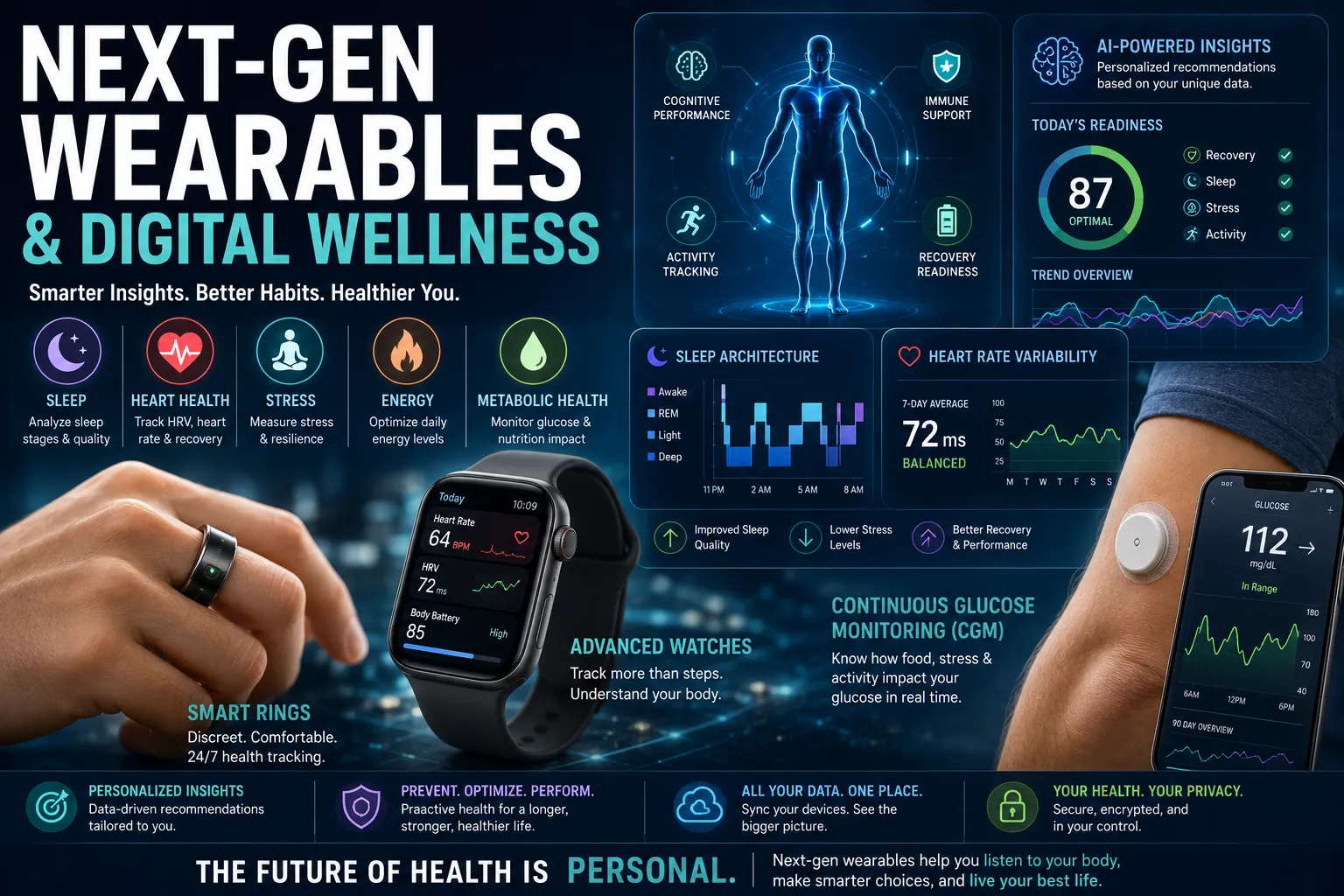
Today’s consumers are no longer satisfied with basic activity metrics. They want deeper understanding of how they sleep, recover, manage stress, regulate energy, and optimize performance. This demand has fueled explosive growth in next-generation wearables, including smart rings, advanced smartwatches, continuous glucose monitors (CGMs), and AI-powered wellness platforms.
As digital wellness becomes more personalized, wearable technology is helping individuals make data-driven decisions that improve long-term health, productivity, and overall well-being.
What Is Digital Wellness?
Digital wellness refers to the use of technology to monitor, improve, and maintain physical and mental health.
Modern digital wellness solutions combine:
- Wearable devices
- Mobile health applications
- Artificial intelligence
- Biometric tracking
- Personalized health insights
The goal is to transform health data into actionable recommendations that support healthier daily habits.
Instead of relying solely on annual medical checkups, individuals can now monitor key health metrics continuously and proactively.
The Evolution of Wearable Technology
Early fitness trackers focused primarily on:
- Step counts
- Calories burned
- Distance traveled
Today’s wearables have expanded far beyond these basic functions.
Modern devices can track:
- Sleep architecture
- Heart rate variability (HRV)
- Recovery status
- Blood oxygen levels
- Skin temperature
- Stress responses
- Activity readiness
- Blood glucose trends
These insights allow users to better understand how their behaviors affect overall health and performance.
The Rise of Smart Rings
Smart rings have emerged as one of the fastest-growing categories in wearable technology.
Unlike traditional smartwatches, smart rings offer:
- Lightweight designs
- Comfortable sleep tracking
- Longer battery life
- Continuous health monitoring
- Minimal distractions
One of the most recognized products in this category is the Oura Ring.
Smart rings are particularly popular among individuals who prioritize:
- Sleep optimization
- Recovery tracking
- Stress management
- Wellness monitoring
Because rings maintain close skin contact throughout the day and night, they can collect highly accurate physiological data.
Understanding Sleep Architecture
Sleep quality is becoming one of the most valuable metrics in digital wellness.
Modern wearables can analyze sleep architecture by identifying different sleep stages throughout the night.
These stages include:
Light Sleep
The transition phase between wakefulness and deeper sleep.
Deep Sleep
Critical for:
- Physical recovery
- Tissue repair
- Immune function
- Growth hormone release
REM Sleep
Rapid Eye Movement (REM) sleep plays an essential role in:
- Learning
- Memory consolidation
- Emotional processing
- Cognitive performance
Instead of simply measuring sleep duration, advanced wearables help users understand how much time they spend in each stage and how lifestyle habits influence sleep quality.
Heart Rate Variability (HRV): The New Wellness Metric
Among health enthusiasts and performance experts, Heart Rate Variability (HRV) has become one of the most important wellness indicators.
HRV measures the variation in time between heartbeats.
Contrary to popular belief:
Higher HRV generally indicates better recovery and adaptability.
Lower HRV may suggest:
- Stress
- Fatigue
- Poor recovery
- Illness
- Overtraining
Why HRV Matters
HRV provides insights into the balance between:
- Sympathetic nervous system (fight-or-flight)
- Parasympathetic nervous system (rest-and-digest)
Many wearable platforms now use HRV data to generate daily readiness or recovery scores.
This allows users to adjust:
- Exercise intensity
- Workload
- Recovery strategies
- Sleep priorities
based on real physiological feedback.
Advanced Smartwatches Are Becoming Health Hubs
Modern smartwatches increasingly function as personal health monitoring centers.
Features commonly include:
- Continuous heart rate tracking
- ECG monitoring
- Blood oxygen measurement
- Sleep tracking
- Activity monitoring
- Stress assessments
- Recovery analytics
Popular devices now combine fitness tracking with medical-grade features that were previously available only in clinical environments.
This convergence of consumer technology and healthcare is reshaping preventive wellness.
Continuous Glucose Monitors (CGMs): Beyond Diabetes Management
One of the most exciting developments in digital wellness is the adoption of Continuous Glucose Monitors (CGMs) by non-diabetic individuals.
Traditionally, CGMs were designed for diabetes management.
However, wellness enthusiasts are increasingly using them to understand how food affects:
- Energy levels
- Focus
- Hunger
- Recovery
- Exercise performance
CGMs provide real-time glucose data throughout the day, allowing users to identify blood sugar fluctuations that may impact well-being.
Why Non-Diabetics Are Using CGMs
Many users seek to optimize:
Energy Stability
Glucose spikes and crashes may contribute to fluctuating energy levels.
Nutritional Awareness
Individuals can observe how different foods affect their blood sugar responses.
Exercise Performance
Athletes use glucose data to improve fueling strategies and recovery.
Metabolic Health
Monitoring trends may encourage healthier eating patterns and lifestyle choices.
Although the long-term benefits for healthy individuals remain under investigation, CGMs have become a significant trend within personalized wellness.
Personalized Health Through Data
The true power of next-generation wearables lies in personalization.
Rather than providing generic recommendations, modern platforms analyze individual data to generate customized insights.
Examples include:
- Personalized sleep recommendations
- Recovery guidance
- Stress management suggestions
- Activity targets
- Nutrition recommendations
This individualized approach helps users make more informed decisions about their daily routines.
AI and the Future of Digital Wellness
Artificial intelligence is rapidly transforming wearable technology.
AI-powered health platforms can:
- Identify behavioral patterns
- Predict recovery needs
- Detect wellness trends
- Generate personalized coaching
- Provide preventive health insights
As machine learning algorithms become more sophisticated, wearable devices may eventually function as proactive health assistants that help users optimize well-being before problems develop.
Benefits of Next-Generation Wearables
The growing popularity of wearable technology is driven by several advantages.
Increased Self-Awareness
Users gain greater understanding of their daily habits and health behaviors.
Early Detection of Changes
Wearables can identify shifts in sleep, recovery, or physiological metrics that may warrant attention.
Improved Motivation
Real-time feedback often encourages healthier choices.
Personalized Wellness
Recommendations become increasingly tailored to individual needs.
Better Long-Term Health Management
Consistent monitoring supports preventive approaches to wellness.
Potential Limitations and Concerns
Despite their benefits, wearable technologies are not perfect.
Potential challenges include:
- Data overload
- Health anxiety
- Device accuracy variations
- Subscription costs
- Privacy concerns
Experts emphasize that wearable data should complement—not replace—professional medical advice.
The most effective approach involves using technology as a tool for awareness rather than obsessing over every metric.
The Future of Wearable Health Technology
The next generation of wearables is expected to become even more sophisticated.
Emerging innovations include:
- Non-invasive glucose monitoring
- Continuous hydration tracking
- Blood pressure monitoring
- Advanced stress prediction
- Personalized longevity analytics
- AI-powered health coaching
As technology advances, wearables may become central components of preventive healthcare systems worldwide.
Final Thoughts
The era of simple fitness tracking is rapidly coming to an end. Today’s wearables offer unprecedented visibility into sleep quality, recovery, stress levels, metabolic health, and overall wellness.
Smart rings, advanced smartwatches, HRV monitoring, sleep architecture analysis, and continuous glucose monitoring are empowering individuals to take a more proactive role in their health.
As digital wellness continues to evolve, the combination of wearable technology, biometric data, and artificial intelligence is creating a future where personalized health optimization becomes accessible to everyone.
Frequently Asked Questions
What is HRV?
Heart Rate Variability (HRV) measures the variation in time between heartbeats and is commonly used as an indicator of recovery, stress, and nervous system balance.
Are smart rings better than smartwatches?
Both offer valuable health insights. Smart rings are often preferred for sleep tracking and comfort, while smartwatches typically provide broader functionality.
What is sleep architecture?
Sleep architecture refers to the structure of sleep cycles, including light sleep, deep sleep, and REM sleep.
Why are non-diabetics using continuous glucose monitors?
Many people use CGMs to understand how food affects energy, performance, recovery, and metabolic health.
Can wearable devices improve health?
Wearables can increase awareness and encourage healthier behaviors, but they work best when combined with professional guidance and healthy lifestyle habits.